La Prima Partenza - Part 2
The First Departure
Alessandro’s imminent departure from Italy and approaching separation from his family brought feelings of trepidation. He grew increasingly anxious. To soothe himself, he spent time with Giuseppina (Pina) planning how to care for their three boys while he would be away, and he continued seeking advice from his friends and family who had already ventured to America. He needed to know what he would need in America, specifically, what to pack in his steamer trunk, and how much money he would need. In 1920, upon arrival at Ellis Island, immigrants were required to show a United States Immigration Officer that they had money with them. While a fixed amount of money was not required, immigrants still had to prove to the authorities that they would not be a financial burden to the United States. They also had to report where they were going and who would be meeting them.
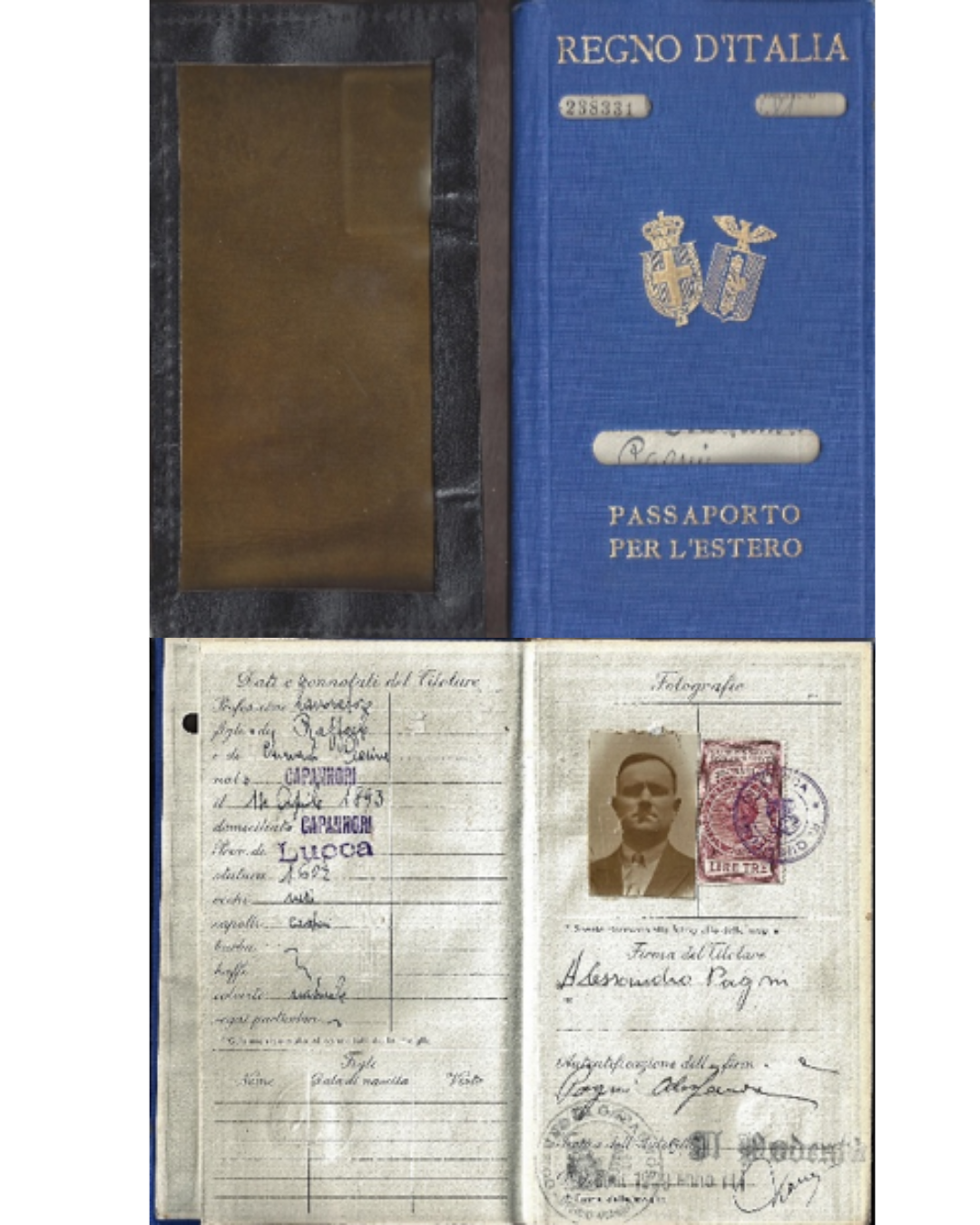
Alessandro’s Passport
Since many Italian citizens were emigrating to America in 1920, steamer trunks, also known as a baule, were readily available in shops. Alessandro purchased his trunk in Lucca, which was only about three kilometers away, making it easy to get it home to Capannori. While luxury trunks were available from major European fashion houses, such as LouisVuitton, Alessandro purchased an inexpensive, locally produced trunk made of wood and canvas, with leather handles and brass fittings.The trunk’s interior was papered with decorative paper, and a tray and specialized compartments housed his belongings. His brother-in-law, Angelo Fanucchi, who would soon meet him in America, told Alessandro what to pack: clothes and shoes, and personal hygiene items such as soap, a comb, shaving supplies, a toothbrush, and toothpaste. Alessandro, an excellent cook, packed a couple of knives: a pocket knife he always carried in his pants pocket and a kitchen knife. He also planned to carry his pocket watch, which hung securely from his pants’ belt loop on a leather strap he had made from an old belt. Nothing was ever thrown away that might be needed in the future. Pina carefully packed a few household linens she had made, items she thought Alessandro might need at his new home. These included a pair of sheets and pillowcases, monogrammed handkerchiefs that she had embroidered herself, kitchen towels, and special bath towels, Alessandro’s Passport carefully edged and embroidered with Alessandro’s monogram – AP. It was unthinkable for Alessandro to buy linens in America. Carefully stored in a special compartment were photos of Pina and their three sons, whom he was leaving behind. As a devout Roman Catholic, Alessandro would also have packed his rosary beads and his daily missal stuffed with commemorative announcements from the funerals of family and friends, each beautifully designed with elaborate depictions of saints and gold edges. Alessandro prayed every afternoon after lunch. This daily ritual would continue on the ship and at his new home in Crockett.
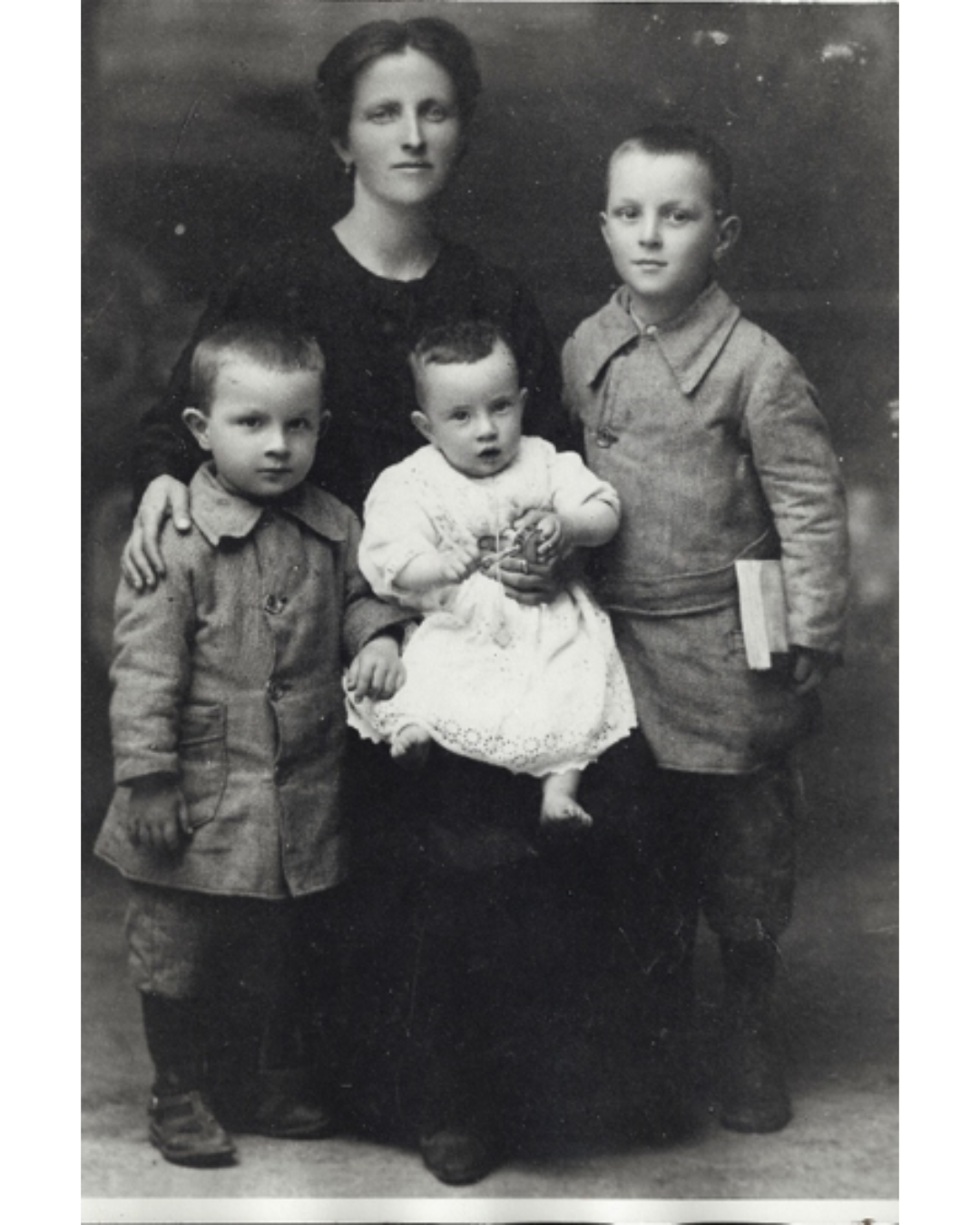
Pina and her sons, 1920
Faustino, Medoro and Raffaello
Departing Capannori at age 27, Alessandro rode in a horse-drawn cart driven by his neighbor, Americo, to the train station in Lucca, where he boarded a train for Genoa. There he found his ship, the S.S. Re D’Italia, and on August 7, 1920, departed for New York City. His passenger identification number was #100230120341. Sixteen days later, he arrived at Ellis Island in New York and checked in with immigration authorities. Ellis Island required that if an immigrant carried less than $50, the money be counted and the exact amount carried be noted on the ship’s manifest. The manifest records that Alessandro carried $29 and change, equivalent to $471.62 in 2026 dollars. The manifest also noted that he was headed for Crockett, California, and would meet his brother-in-law, Angelo Fanucchi, the man who had put Alessandro’s voyage in play. Alessandro boarded a cross-country train for Crockett, and after a stop at Chicago’s Union Station and several more days, he arrived at the train station in Crockett, which is now home to the Crockett Historical Museum.
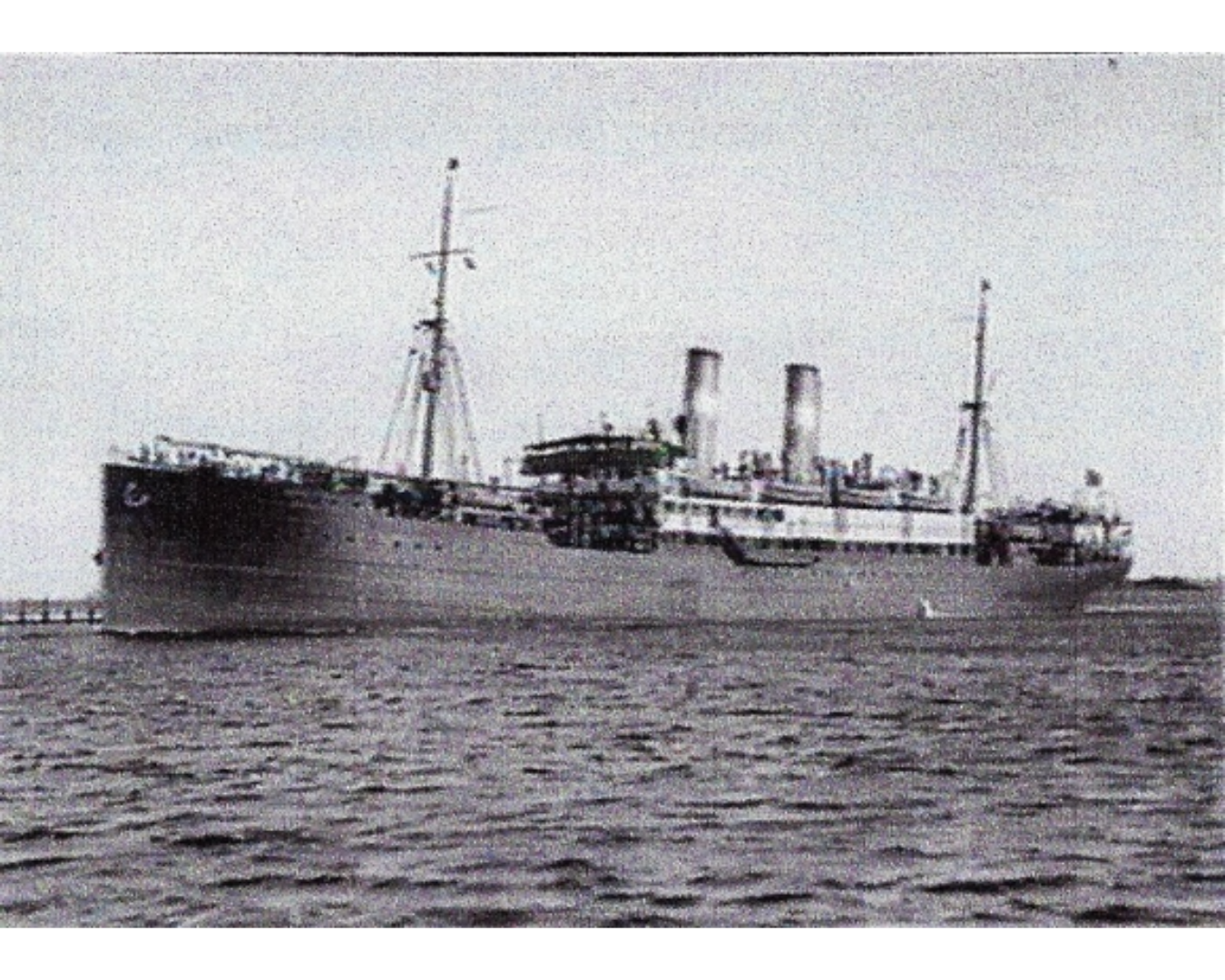
The S.S. Re d’Italia
Alessandro quickly found work at the C&H Sugar Refinery, which was facing acute worker shortages. He found lodging in the various Valona homes and boarding houses owned by earlier-arriving immigrants who rented rooms to working immigrants. Valona was predominantly an Italian neighborhood, one that seemed to have been transported from Italy, and speaking English wasn’t required in Valona or for employment at C&H at the time. About a quarter of the refinery’s employees were Italian immigrants. As soon as he could, Alessandro began to send money home to Pina. In Crockett, he developed deep, loyal friendships with other Italian immigrants, the most notable of whom was Amato Baccetti from Massa Macinaia, a small town about 12 miles from Capannori. Alessandro had met Amato on the S.S. Re d’Italia, became fast friends, and the two navigated their emigration journey together. They would both work at C&Hand live next door to each other on Del Mar Circle in Valona. Every summer, they cultivated Lucchese heirloom tomatoes from seeds one had hidden in his steamer trunk, and they tended their shared herb and vegetable gardens together. Amato never married and became a part of Alessandro’s family, sharing holiday celebrations throughout the year. They remained close friends for the rest of their lives.
Pina’s life in Capannori . . . . .
Pina was a petite young woman, barely five feet tall, who walked with a limp due to a childhood illness. One of her legs was shorter than the other. While her limp was severe, her sons often joked that she could still outrun and chase them if necessary. Without Alessandro, Pina’s days were filled with caring for her three boys and her parents. Being resourceful and hardworking, she also earned what money she could from cottage industries common at the time in the Lucca area of Tuscany. Their house was small and modest, built on a small piece of property of unreinforced masonry on two floors, without electricity or indoor plumbing. To keep warm, Medoro slept with Pina; Faustino slept with his grandfather, Fausto, after his wife, Luisa, died in October 1920. Pina’s eldest son, Raffaello, slept alone. Candles lit their dark rooms at night, and the large wood fireplace in the kitchen provided both light and heat for cooking and heatingfor the house. Wood was gathered, chopped, and carried into the kitchen. On cold nights, everyone sat around the fire to keep warm.
Fausto entertained the boys with stories about Tuscan folklore, such as the Mago, the ‘boogeyman,’ or Puiting, a small, clever boy who outsmarted il lupo, ‘the wolf.’ Since Fausto had himself traveled to America, worked, and returned, he also told stories about his time there. All cooking took place in the large hanging caldron over the fireplace or on a stand for a frying pan, with no oven. Bread and simple desserts, such as biscotti, ‘cookies,’ and torte, ‘cakes,’ were baked in a neighborhood communal oven at the beginning of each week. The toilet was outside in an outhouse. During the night, commodes in each bedroom were used. Water for baths – taken only once a week – was heated in the large fireplace. Everyone shared the same bathwater, and the last person to bathe did so in cold, dirty water. The kitchen sink was a large, rough, farmhouse-style concrete sink. A hand pump drew water from a well, a huge convenience.
The family was fortunate to have a cow that provided milk. There was no refrigeration, so the milk was never cold. Faustino was known for sneaking into the kitchen and skimming the cream from the top of the milk once it had separated. Pina helped her father in their small orto, or ‘vegetable garden.’ There, Fausto planted what he could to keep everyone fed. He used whatever the family didn’t eat to barter for what he didn’t produce himself, such as meat, eggs, flour, spices, and olive oil. Pina nursed Medoro and fed Faustino, a three-year-old at the time, with an insatiable appetite. Raffaello was now six years old. Their food was simple; there wasn’t much of it, and nothing was thrown away. The family’s main diet consisted of bread and more bread, fagioli, ‘beans,’ vegetables from the garden, and what fruit was available and in season. They ate minestra, ‘minestrone,’ and simple pasta, and occasionally meat, if they could afford it, but no more than once a week, usually on Sunday.
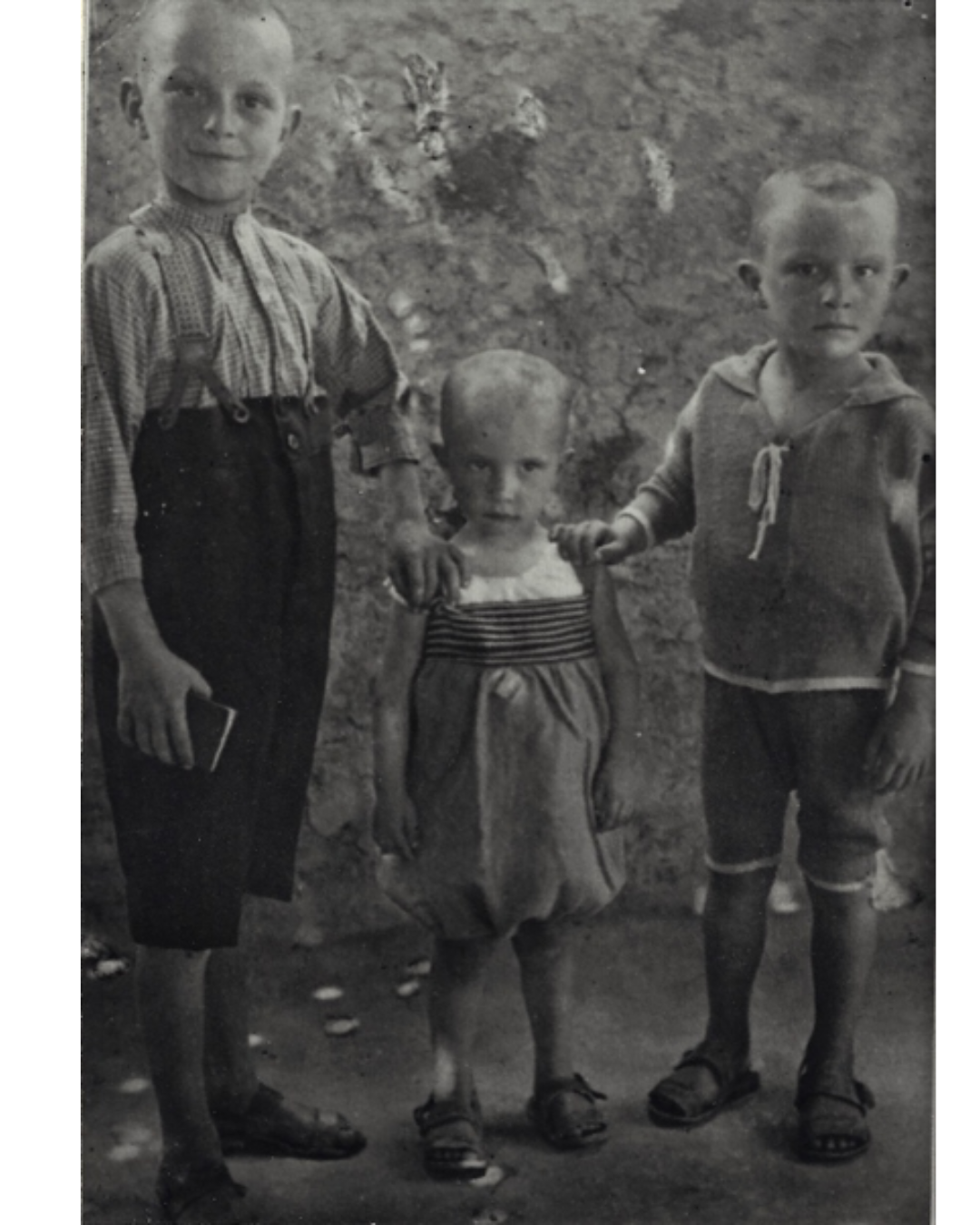
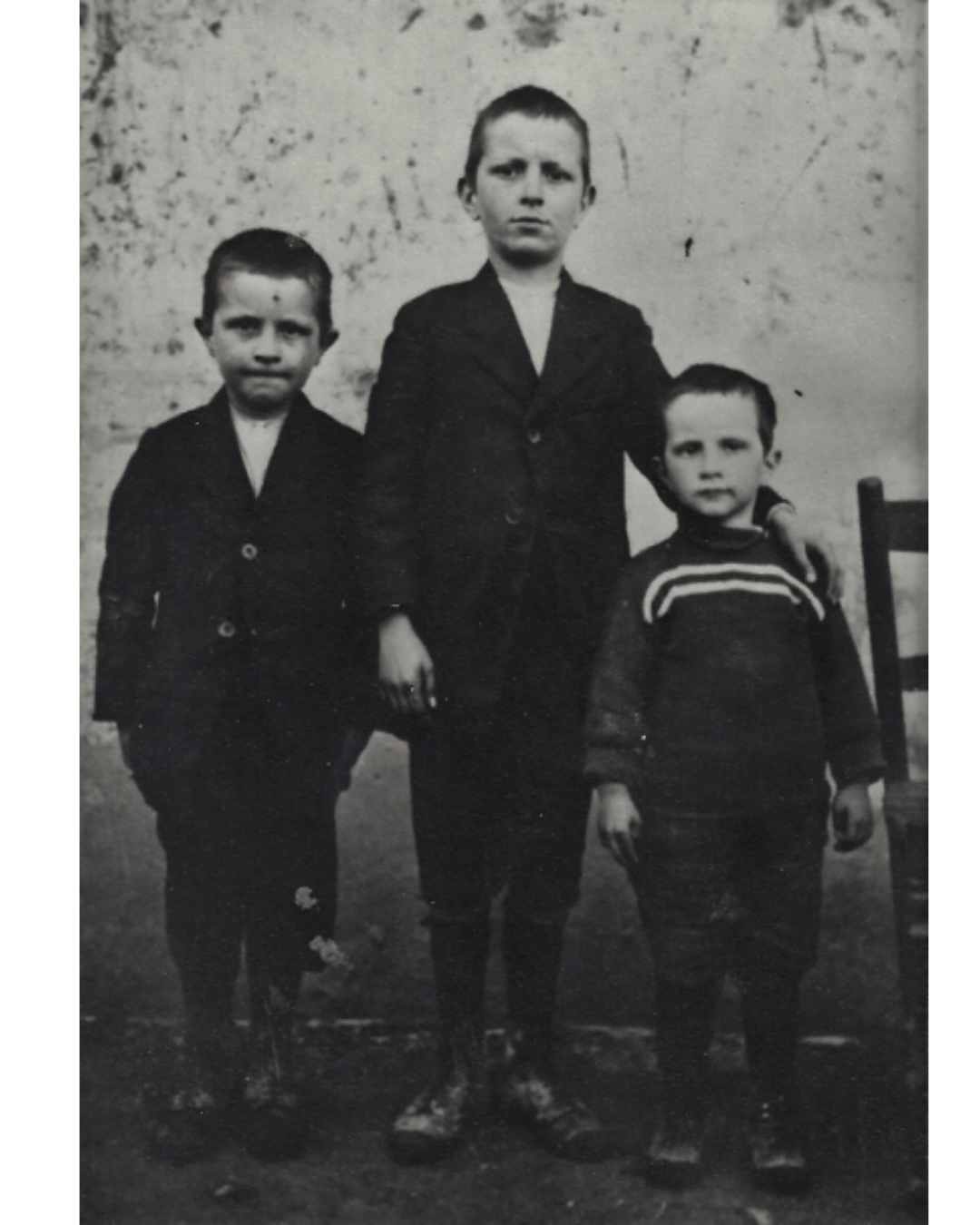
Faustino, Raffaello and Medoro
The main meal on Sunday was always at lunch, when Fausto often made his sugo‘sauce,’ and fresh pasta, always thick-cut tagliatelle. On rare occasions, Fausto made sugo with meat or wild boar, which were prevalent in the hills. To make a salad, Pina foraged for wild greens along neighborhood roads or in the fields, often finding wild chicory and dandelions. She dressed these with olive oil and a generous amount of red wine vinegar that Fausto had made himself in his cantina, ‘basement.’ Pina’s sister, Giuletta, whose family worked a small farm, provided the family with olive oil and pork lard. Each November, Giuletta rendered the lard after her family butchered a pig and gave some to Pina. The lard was stored in the cold kitchen in a container made by inflating and drying a pig’s bladder. After it dried, a hole was cut in the bladder; it was filled with lard and hung from a hook and rope from the kitchen ceiling.
Every Monday, Pina made minestrone with whatever leftovers she had on hand and added stale bread to give the soup more volume. In the winter, it was so cold at night that she would tuck the boys into bed, then go from room to room carrying a loaf of bread and a knife. She cut a large slice of bread and gave it to each of her sons, giving them something to chew on and, hopefully, to fill their hungry, often-empty bellies before they fell asleep. One night, while Pina was slicing a piece of bread for Faustino, he impatiently tried to grab the bread, and the knife cut his finger badly. At the end of his life, he often said that the scar was a good reminder of the agony of hunger, and he bore that scar until the day he died at almost 96 years old.
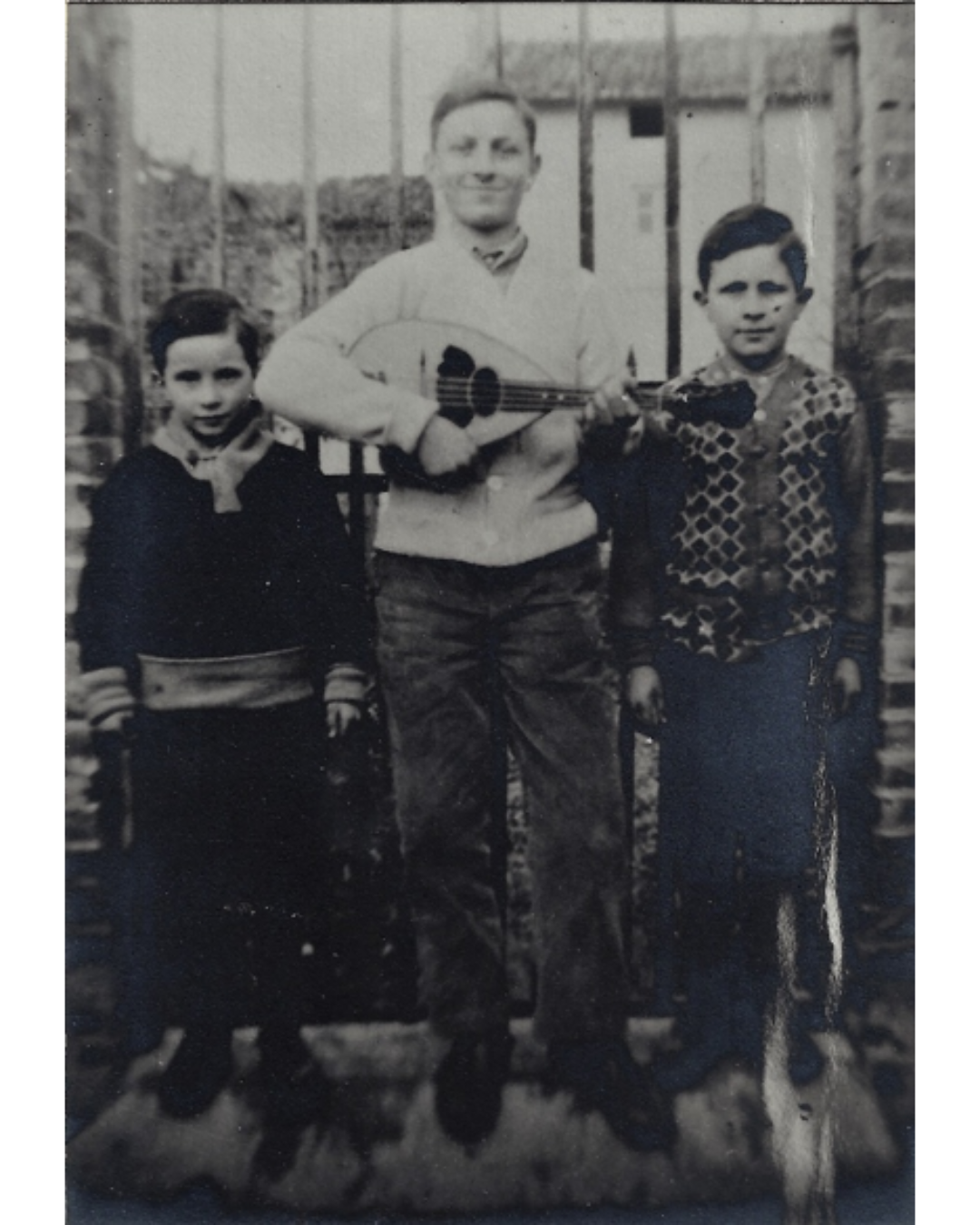
Medoro, Raffaello, and Faustino in Capannori, Italy
Once a week, the women in the neighborhood and old men who could no longer work the fields gathered to bake bread in the communal wood-fired bread oven. Always a social event, they took turns feeding wood into the oven and bringing it to the proper baking temperature. Everyone helped each other. If Pina had enough flour, she made simple biscotti, and in the fall, a chestnut tort, baked after the oven had cooled considerably at the end of the day.
With her sister Giuletta, Pina made all her own household linens, including fabric for sheets, pillowcases, bath towels, and kitchen towels. This was not a simple task because the fabric had to be made first: planting hemp, harvesting it, spinning the thread, and weaving the fabric. When it was time to cultivate the hemp field, their father, Fausto, prepared it in the spring and, with his daughters’ help, planted the hemp seeds after the last frost. The hemp grew into a woody structure and was harvested in July. The woody stalks were cut and left to ferment in the damp fields, and over time, the hemp strands were removed from the woody shafts. Neighbors worked together during this labor-intensive process. In winter, when there was no work to be done in the fields, the filaments were spun into thread, then woven into cloth. Since their primitive household looms were only three feet wide, the resulting fabric had to be sewn together to make sheets. Pina sewed the fabric together using flat French seams. This seam encases raw fabric edges with two lines of stitching, resulting in finished edges on both sides of the sheet. While the seam was durable, it was thick, and Faustino was uncomfortable because he slept on his side, right on top of the seam.
Nothing was wasted, and when the sheets wore out, they were ripped apart and used to make hand towels or other small household linens. At the end of the day, in the light of the large fireplace, Pina relaxed by crocheting edgings for her linens and decorating them with intaglio, ‘cutwork embroidery.’ While working, she dreamed of the day when Alessandro would return home to her and their family. Her daydreams included her purchasing a suitable piece of land on which to build their home, a home she would fill with the beautiful linens she had worked so hard to create.
The days of work, worry, and responsibility for Alessandro and Pina turned into weeks, then months, and the months became years. Alessandro continued to work at the C&H Sugar Refinery, sending home letters with stories of his life in America and as much of his paycheck as he could. Pina continued to live frugally and saved money. Feeling the grief of losing his beloved Luisa and so many of their children, Fausto summoned his strength and continued to help his daughter, and she him.
Tenaciously resourceful, Fausto continued working odd jobs well into his eighties. Capannori was primarily an agricultural community of small rural farms. Living in a wine-producing area of Tuscany, Fausto kept himself busy collecting the crusty residue that built up inside old wine barrels. This residue was potassium bitartrate, which forms naturally during wine fermentation and aging. Fausto sold what he collected to traveling merchants, who sold the residue to processors who refined it into cream of tartar, used in baking, and tartaric acid, used in food, textiles, tanning, and pharmaceuticals. Fausto also collected damask rose petals from his garden or from wild roses that he found in fields and along country roads. Rose petals were valued because they could be processed into rose oil or rose water, both of which were used in the perfumery and cosmetics industries. During the spring and summer blooming season, Fausto gathered rose petals in the morning, when they were most fragrant, and he quickly sold them to distillers or perfume workshops, most likely in Lucca.
In the spring, Pina busied herself with cultivating silkworms in the house’s attic. Cultivating silkworms was a typical and necessary rural family cottage industry, as it provided extra money that families needed. Silkworms fed on the tender young leaves of mulberry trees, and, lacking those in her yard, Pina and her sons, Raffaello and Faustino, collected leaves in the spring from trees they found in fields and along roads throughout the Lucchese countryside. Pina purchased eggs or saved them from the previous season, keeping them warm until they hatched in April or May. For about a month, Pina and her boys tended the worms in the warm attic, feeding them fresh mulberry leaves day and night, several times a day. The worms were voracious eaters, and Raffaello and Faustino were kept busy collecting leaves. They ran through the countryside shoeless, as they didn’t wear shoes from the day after Easter, Pasquetta ‘Easter Monday,’ until they returned to school in the fall. A happy memory for Faustino was the humming of thesilkworms as they ate in his farmhouse attic.
After about a month, as they matured, the worms stopped eating. The mature worms were placed on branches carried by Pina’s boys into the attic, where they spun their cocoons. Each worm made a cocoon, each cocoon containing a continuous silk filament that could be hundreds of yards long. This process took several days. Once the cocoons were finished, Pina sorted them by size, checked for defects, and sold them by weight to merchants who traveled throughout the countryside by horse-drawn cart to buy them. The merchants, in turn, sold the cocoons to silk mills, where the silk filaments were unwound and processed into silk thread. Pina would come to rely on this extra money in the future, when she and her boys emigrated to America.
Pina was both gentle and firm with her boys, and both she and her father, Fausto, focused on protecting them. One day, Medoro returned home from school with red knuckles, bruised by several blows from his teacher’s ruler. Pina picked up her broom, grabbed Medoro by the arm, and quickly marched back to the school in a fury, her apron strings flying. She found the teacher and told him that if he ever touched Medoro again, she would beat him with the broom! Fausto was the boys’ nonno, ‘grandfather.’ More importantly, he stepped in as their substitute father, feeling it his duty to protect his daughter and her family. He was strong, both physically and mentally, and he possessed a great deal of integrity.
When fascism took hold in Italy in 1922, many in the neighborhood joined the party by paying a modest tax. In doing so, they received benefits, such as a regular allotment of cheese. Since Fausto refused to join the party, the fascists, known as the camicie nere or ‘black shirts,’ showed up from time to time to demand that he pay the tax. He continued to refuse, and late one night, after everyone had gone to bed, the family heard someone pounding loudly with their fists on the big porta, ‘door.’ Fausto opened a second-floor bedroom window above the door to see what all the commotion was about. Discovering that it was a group of fascists who had come to demand he pay their tax, Fausto told them to wait for him to open the door. As the fascists waited, and with a determined plan, Fausto and Faustino quickly ran from bedroom to bedroom, emptying all the commodes into one, then carried it to the open window. Fausto dumped the fetid waste on the fascists and delighted in hearing their screams. After yelling his own expletives, he closed the window, and everyone went back to bed. In the morning, when Pina went downstairs to begin preparing breakfast, she noticed a foul smell. When she opened the porta, she found that during the night, the fascists had returned and smeared the door with human excrement. In the end, Fausto never paid the tax, never joined the party, and the fascists never bothered his family again. It must be said that many of the neighbors who joined the party felt sorry for Pina and her family and gave her what cheese they could spare. Clearly, this event influenced the family’s decision to emigrate to America several years later.There was a camp of zingari, ‘Gypsies’, in the area. One day, when Pina was walking alone on the road to Lucca, she was mugged, and her wedding ring was stolen. Upon hearing the story of the mugging, Fausto quickly left home to find the camp and to recover Pina’s ring. Not much is known about the details of his counterattack, but suffice it to say, he came home with the ring. Pina wore the ring until the day she died and gave it to Medoro on her deathbed. When Raffaello came home and told Fausto about how Adolfo, a neighborhood man, had admonished him on the way home for something he had not done, Fausto began to plan his revenge. Adolfo, an attorney, always walked past Fausto’s house at the same time every day on his passeggiata, ‘afternoon walk.’ He walked with a cane and was always smartly dressed in crisply creased wool pants and a starched white shirt. Knowing this, Fausto selected the sootiest iron frying pan he could find in the kitchen, hid it behind his back, and went out to wait for Adolfo by the gate. When the man passed by, Fausto told him not to admonish his grandson again, and a heated argument ensued. When the old man walked away, Fausto slapped his back with the pot, leaving a perfectly round, black, sooty imprint on the back of Adolfo’s perfect white shirt. Enough said.
Medoro’s brushes with death . . . . .
During his young life, Medoro had two brushes with death. The first occurred when he was three years old and suffering from a high fever. He was unresponsive, and the doctor told Pina there was nothing more he could do for Medoro. That night, dressed in his white hemp nightgown, Pina placed Medoro in his cradle in the kitchen by the warm fire. Fausto, who had lost so many of his own children, braided a necklace of garlic and put it around Medoro’s neck. Then he poured some red wine into a glass, saying, “Sesta per morire, morirà con stile!” or “If he’s dying, he will die in style!” Fausto raised Medoro’s head and forced a few drops of wine into Medoro’s mouth. Faustino said goodbye to his baby brother, Medorino, and then went to bed as usual with his nonno Fausto. In the morning, Faustino ran to the kitchen expecting to find Medoro dead, but, to his delight, he found Medoro wide awake and smiling. During the night, his fever had broken. To this day, the family prefers to think that the braided garlic necklace, red wine, and the many prayers said that night brought a miracle for Medoro, who, when he actually died many years later, was well over one hundred years old. Medoro’s second brush with death occurred when he and Faustino were at the fosso, ‘canal,’ with Pina and several neighborhood women. The fosso, filled with water, ran through Capannori and was where the women did their laundry by hand. Slippery steps ran from the fosso’s steep bank to the water, and Medoro slipped on the stairs, fell into the fosso, and quickly found himself in deep water, not knowing how to swim. For the rest of his life, he remembered the fear he felt as he thought he was about to drown, and how it felt when Maria Pellegrini, a neighbor, reached down into the water and grabbed him.
Transition . . . . .
In time, Alessandro sent enough money home for Pina to buy a small piece of property, a small farm, that could support their family. In the Spring of 1929, Alessandro left his job at the sugar refinery and his life in Crockett. He made the long trip home to his family in Capannori. This time, the trip was in reverse. He boarded a train at the train station in Crockett and traveled cross-country to New York. There, he boarded a ship and landed in Genoa. In Genoa, he boarded a train bound for Lucca and walked about three kilometers to Capannori. The entire trip lasted three to four weeks. But alas, he was home after more than eight years. And so began the long process of getting to know his sons, particularly his youngest, Medoro, who, when Alessandro left, was but a baby. But what awaited Alessandro would prompt him to reconsider whether his return to Italy, his beloved homeland, had been a good decision.